Your thinking comes first.
The note is the foundation. Write and edit in Markdown, organize your work into vaults, and keep developing an idea at your own pace.
06 /Our point of departure
Before an idea becomes something remarkable, it’s a question. A note. A connection waiting to be made.
Apollo 6 is a place for that work.
Where the name comes from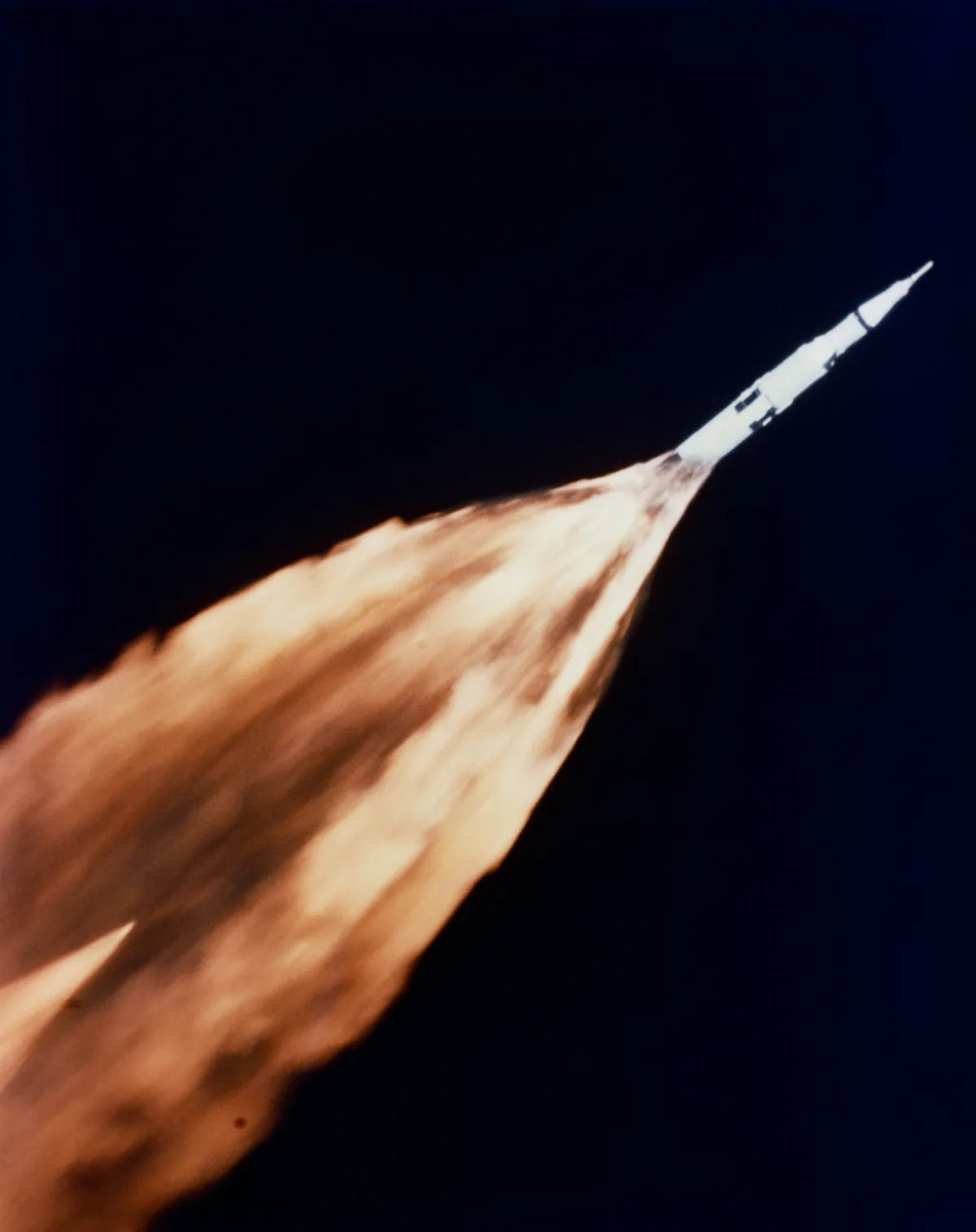
Not the finish line. The flight before.
On April 4, 1968, Apollo 6 lifted off on the second test flight of the Saturn V. There was no crew on board. The mission was there to test, to reveal problems, and to help prepare the way for people.
The flight wasn’t flawless. What it revealed mattered. Later that year, Apollo 8 carried the first crew aboard a Saturn V—and took them around the Moon.
That is the part of the story we carry with us. The willingness to ask, to try, and to build on what we learn.
Read the mission history at NASAOur belief
Great thinking doesn’t
happen all at once.
It comes together.
What we’re building for
The note is the foundation. Write and edit in Markdown, organize your work into vaults, and keep developing an idea at your own pace.
A connection can be as valuable as a new idea. Linked notes and a visual graph help you see the relationships around what you’re working on.
Ask works with the context you bring. Agent helps with work in your active vault. You can inspect the resulting changes and keep your own judgment.
An uncrewed Saturn V test flight.
The first crewed Saturn V launch.
A name inspired by the work of discovery.
An independent product. Not affiliated with or endorsed by NASA. Historical sources: Apollo 6 and Apollo 8.
Keep going
There’s more to discover in what you already know.
Open Apollo 6Use Apollo 6 in your browser, or download the Linux or Android app. An Apollo 6 account and internet connection are required.